Words With Friends 2: Tile Styles
A collectible cosmetic system that turned the tile, the most-touched surface in Words With Friends 2, into a way for players to progress and personalize, without touching core gameplay.
- Senior UX Designer
- 2017 – 2018
- iOS, Android
- Product manager, UX director, Engineering manager, 3 engineers
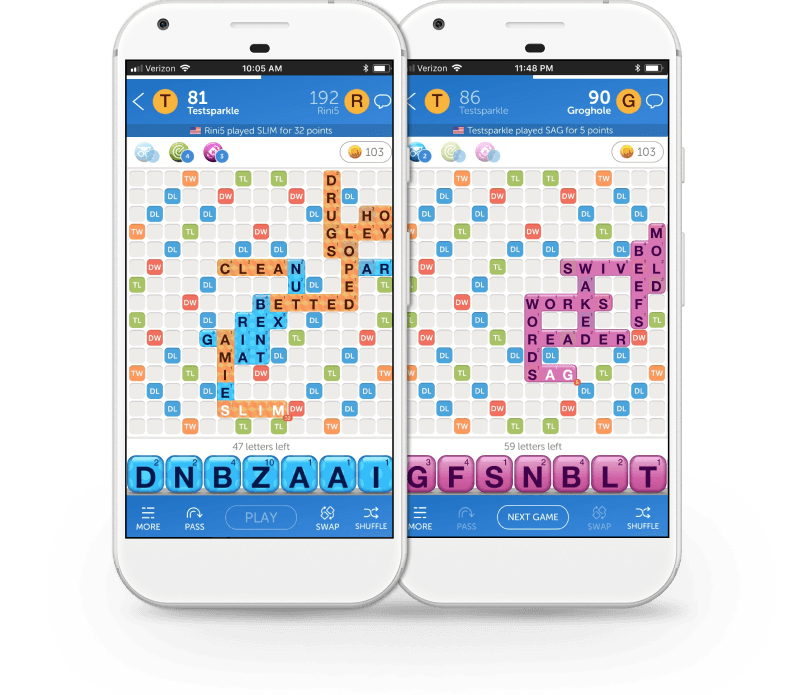
- +3% Daily active moves
- ~$1M/mo Ad revenue per 1% lift
Tile Styles are collectible cosmetic tile sets that let players personalize their game experience without affecting gameplay. They can be earned, unlocked, or purchased. They give players a reason to come back, and something to show for it.
The problem
Retention opportunity
Words With Friends 2 had no long-term progression. Once players settled into the routine, there wasn’t much pulling them back.
The approach
Exploring the player experience
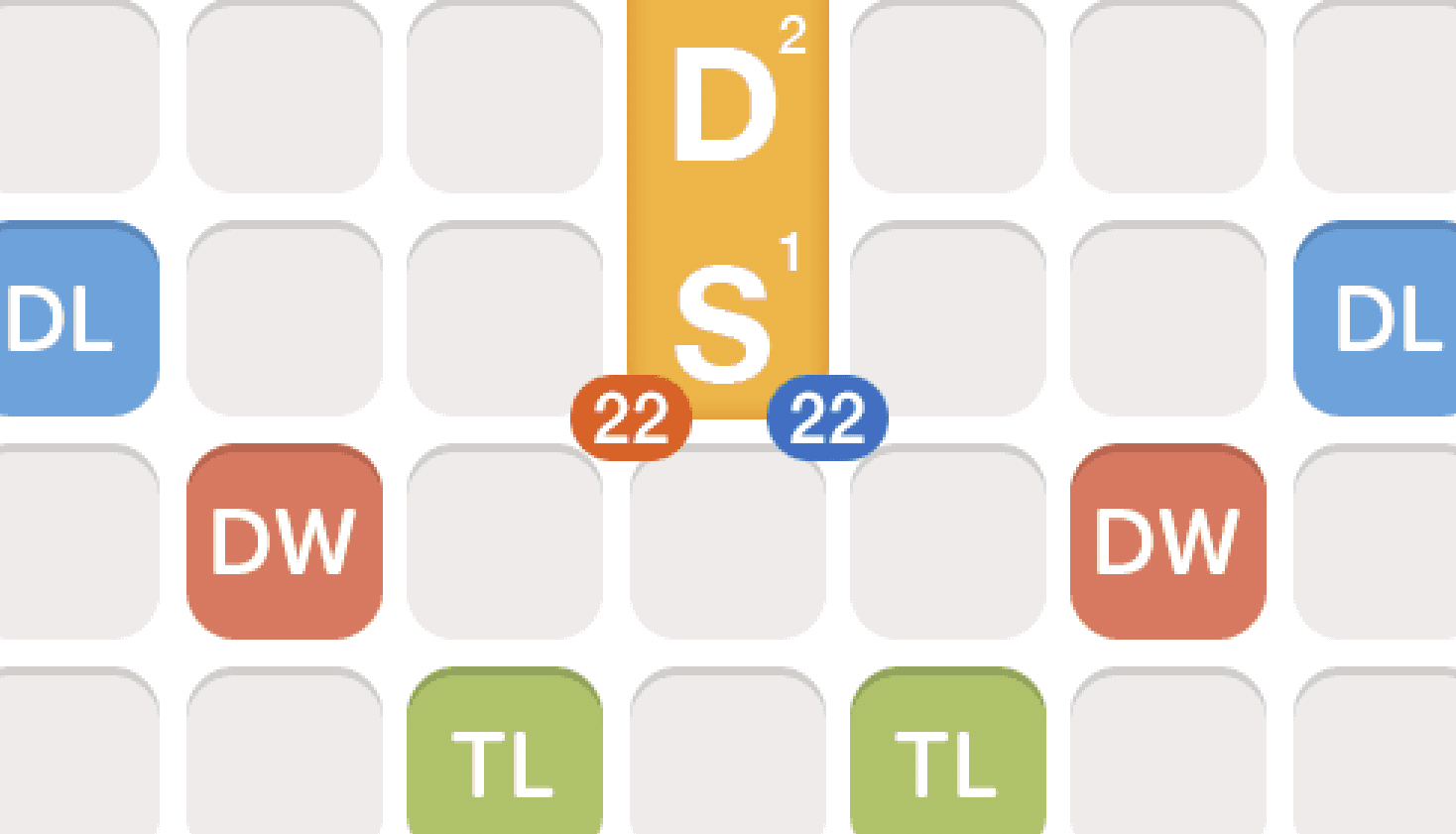
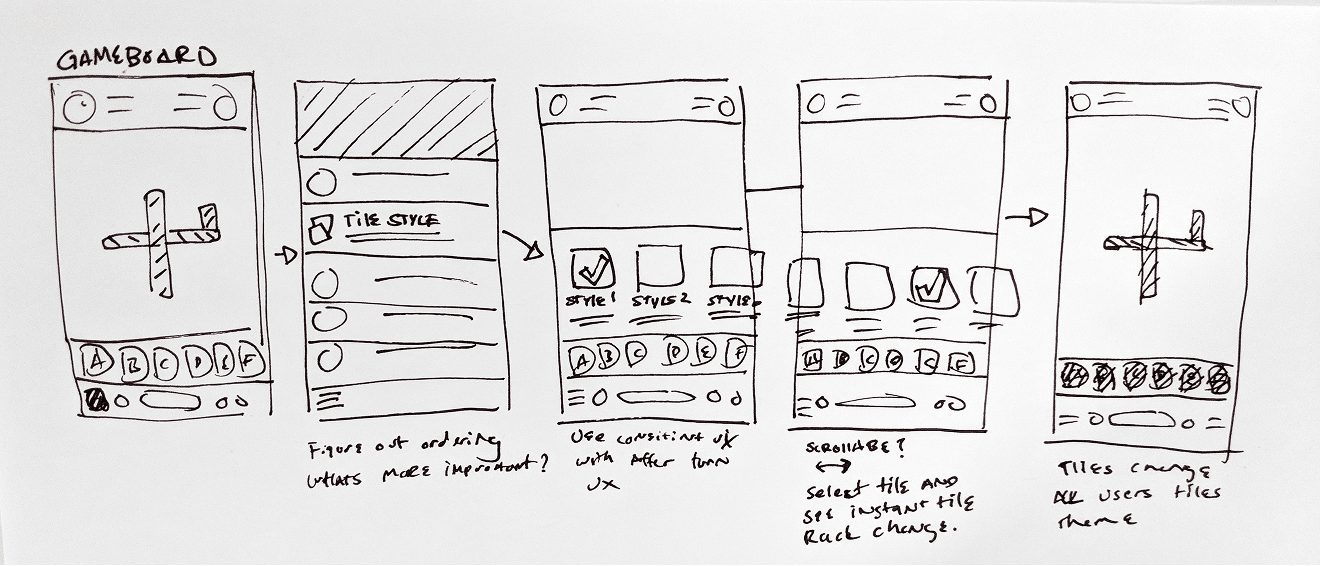
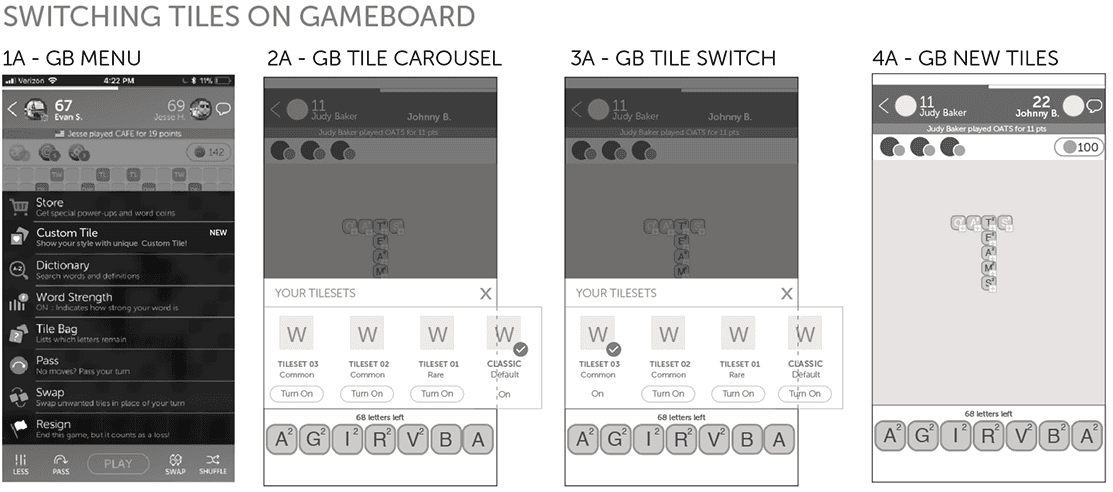
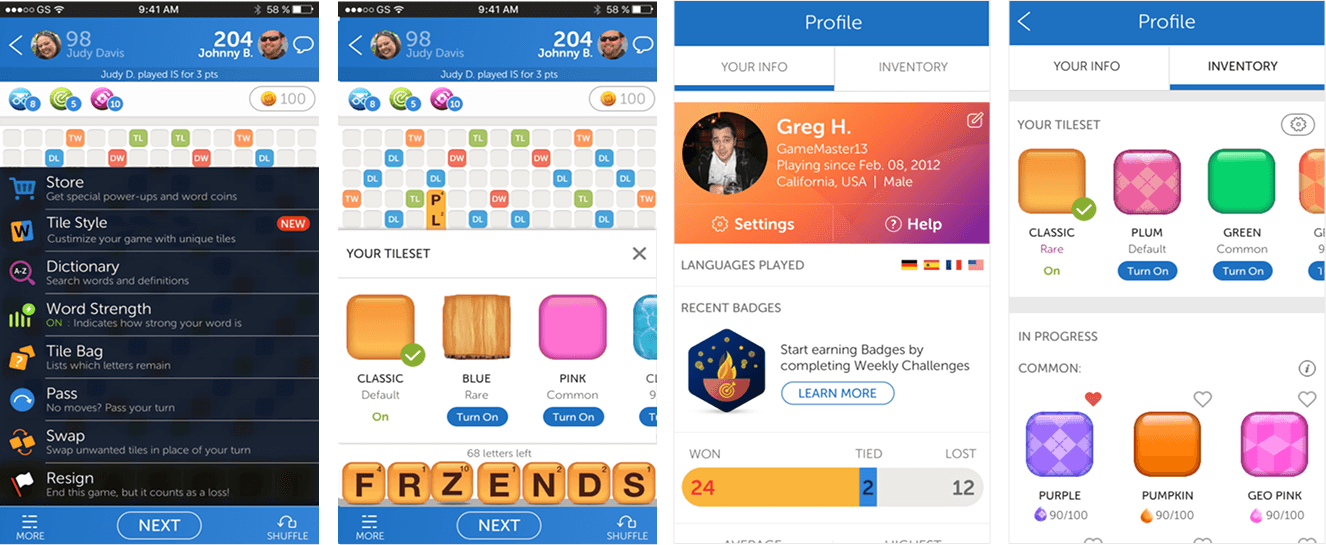
I explored ways for players to browse and switch tile styles without breaking the game underneath. Keeping the board visible mattered. Players rely on spatial context and rhythm, and hiding the board breaks both. I tested navigation patterns in wireframes and prototypes, optimizing for speed.
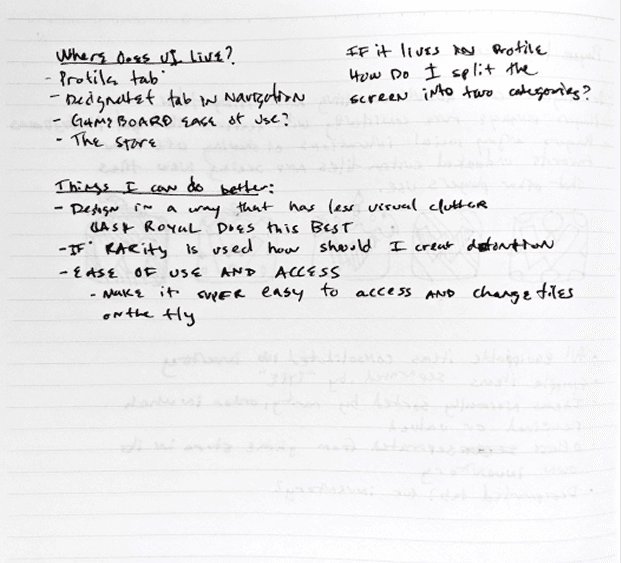
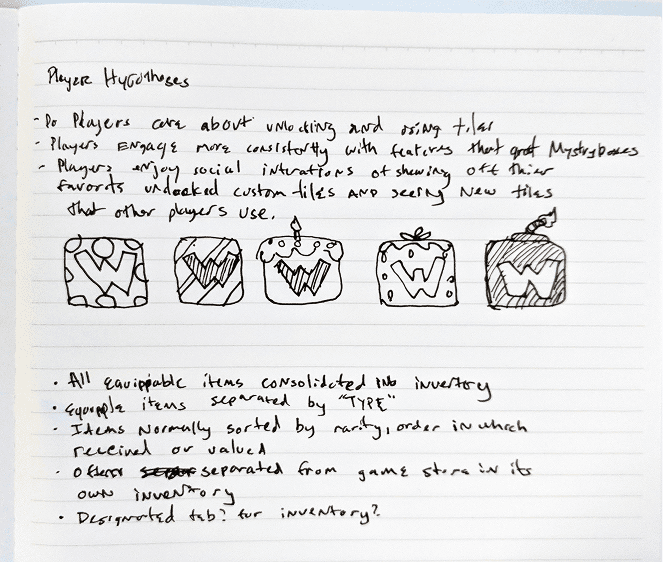
A competitive review of cosmetic inventory systems informed decisions around rarity, organization, and placement within the product.
The vision
Tile Styles
Build a collectible cosmetic system that gives players a reason to come back and a way to make the board their own, without interfering with the gameplay underneath.
The solution
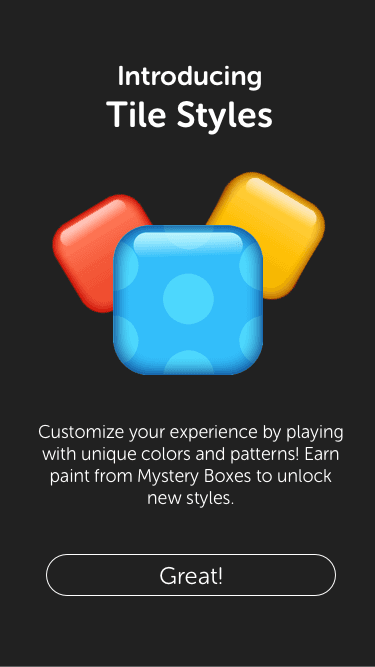
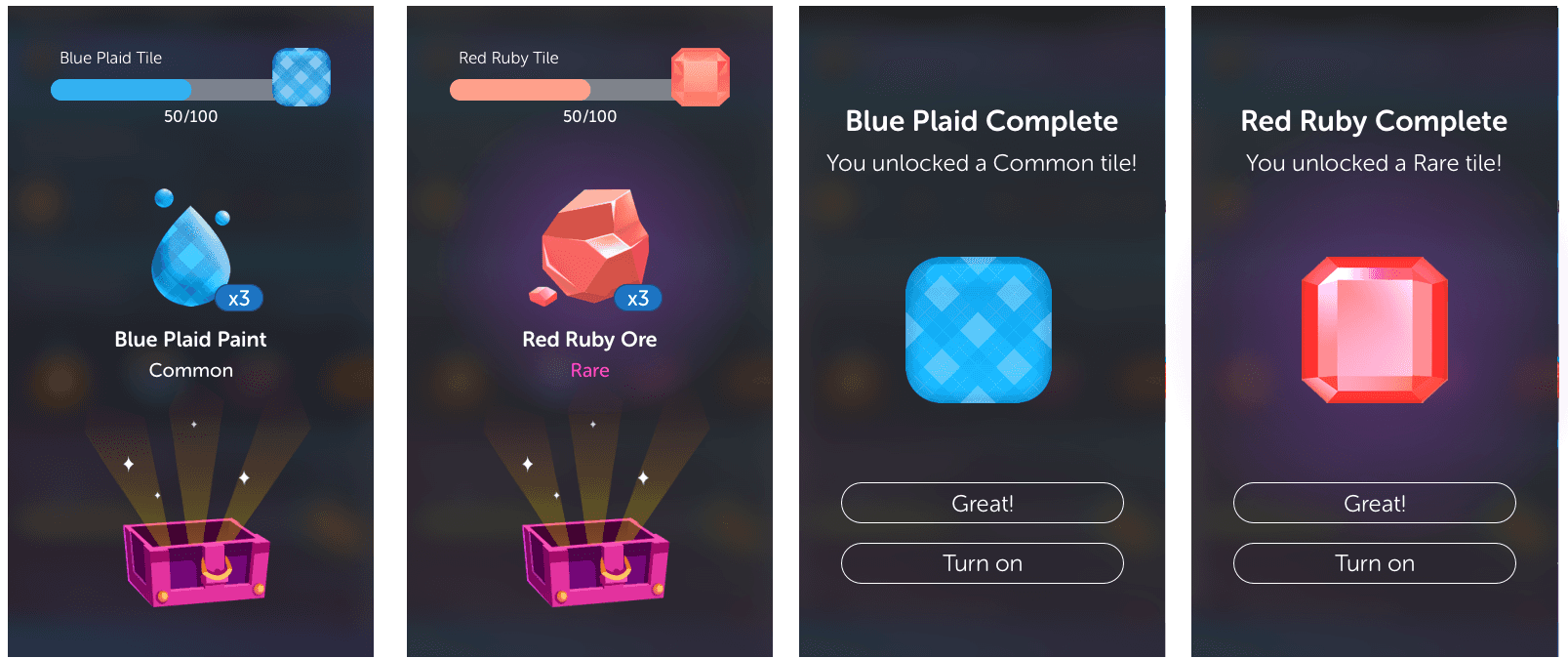
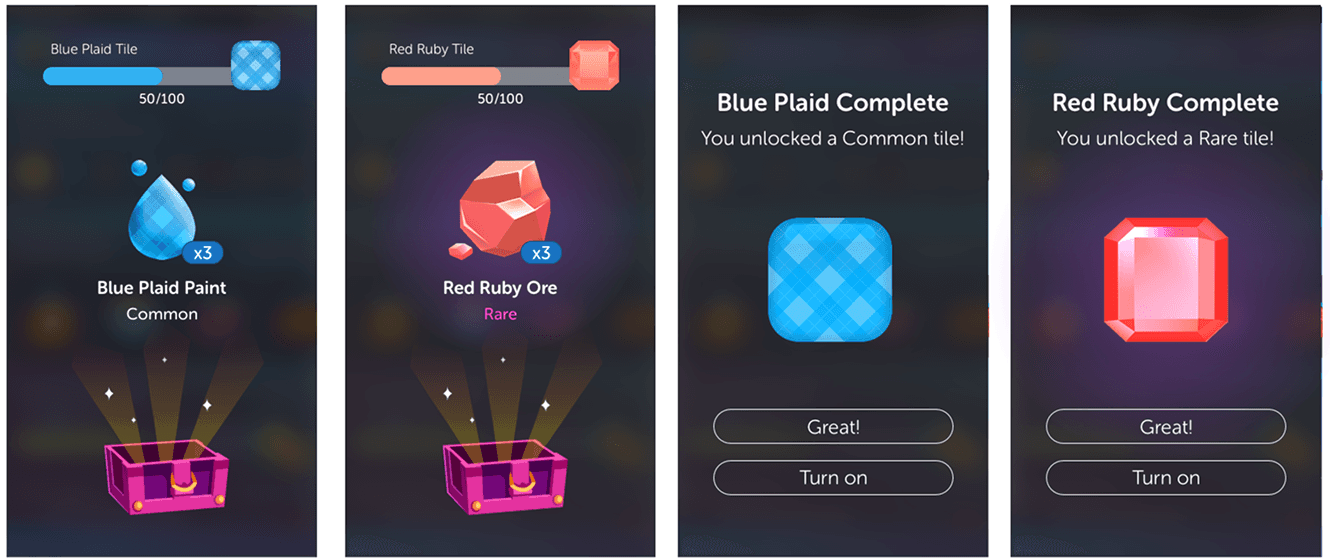
Tile Styles added a cosmetic progression layer to Words With Friends 2. Players collect “paint” through gameplay to complete tilesets, equip styles on the board, and switch quickly without breaking flow. The system gives players something to chase, something to earn, and a board that feels like theirs.
The framework
- Visible over Hidden.
Ensure players can preview and switch tile styles without confusion or disruption. Keep interactions simple, visible, and intuitive.
- Flow over Friction.
Prioritize preserving the core gameplay rhythm over adding visual embellishments. Cosmetic features must never slow players down.
- Expression over Uniformity.
Support personalization by making each tileset feel distinct and meaningful, encouraging players to express themselves through the styles they earn.
- Optional over Forced.
Respect long-time players’ muscle memory. A global on/off switch lets the system live alongside the familiar game, never on top of it.
Tile switching
I designed the switching flow to preserve board visibility and keep players in rhythm. Showing styles in context allowed players to quickly judge readability and visual balance. Each tileset needed to feel distinct to encourage expression and collection.
Progression
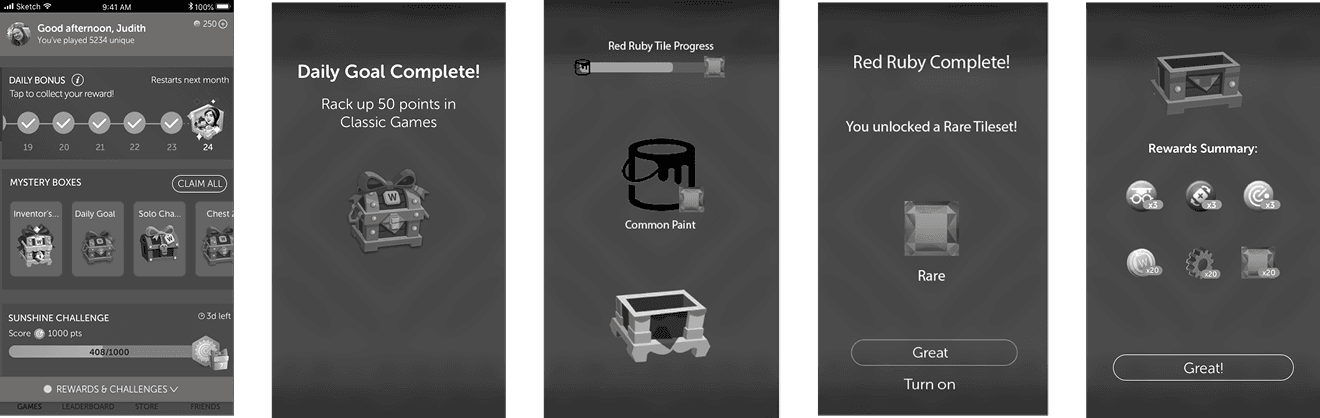
”Paint” as the collection thread
A key design question was determining what players should collect before completing a tileset. I introduced the idea of “paint” as a thematic resource used to finish a style. This narrative approach tested well. It gave players a clear story behind progression, and the collection loop went from abstract to obvious.
Reflection
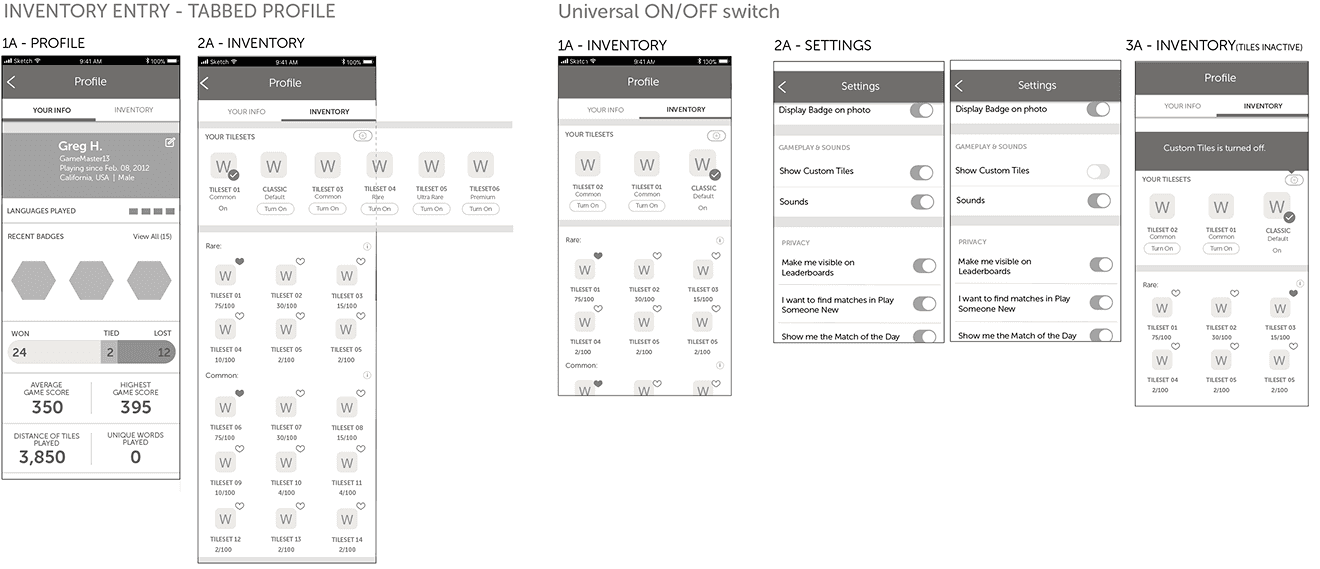
Global on/off control
Because players can be sensitive to features that alter the core experience, I designed a global on/off control for Tile Styles. That gave skeptical players an out, and let the familiar board stay familiar.
Onboarding
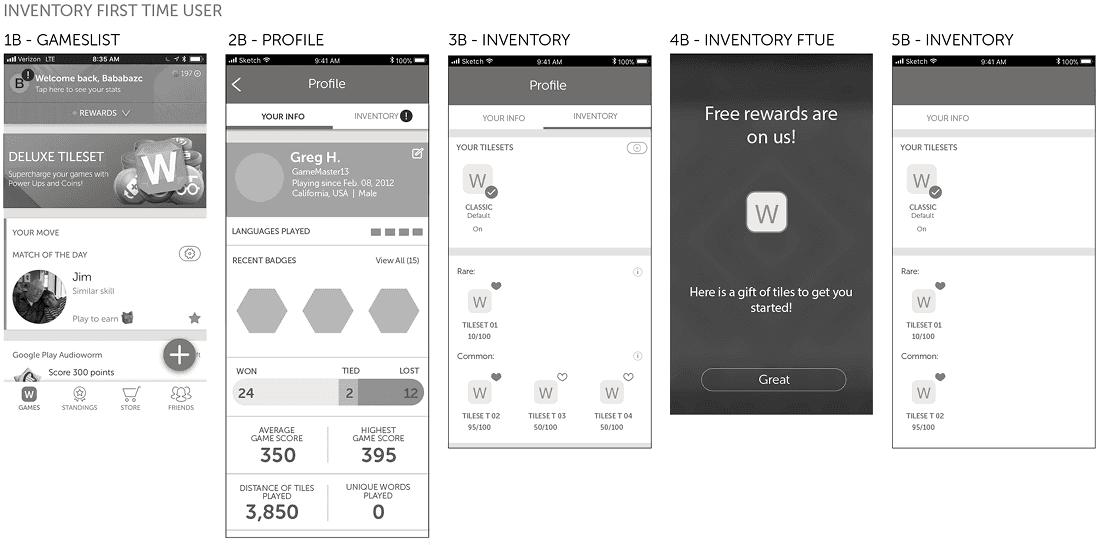
Discovery through the profile badge
To help players discover the inventory organically, I surfaced it through a profile badge. This approach avoided disrupting play, but in hindsight it may have been too passive. A more guided onboarding could have improved discovery while still respecting the core loop.
Prototyping
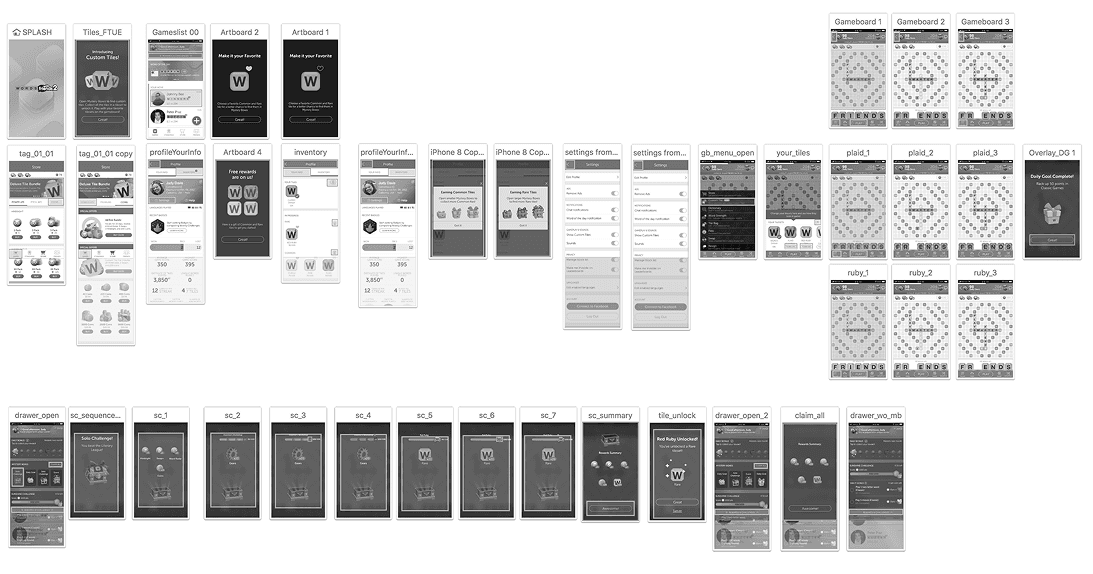
Skip-friendly reward flow
Prototyping revealed timing issues and edge cases in the rewards flow that forced players through several consecutive screens. To reduce friction, I introduced a “tap anywhere to skip” interaction, allowing players to control pacing and stay in flow.
The execution
The impact
Tile Styles gave Words With Friends 2 a long-term progression loop without touching the core game. The +3% lift in Daily Active Moves is summarized in the top metrics.
Each 1% lift represents roughly $1M in monthly ad revenue.
Project learnings
Designing for a 12-year-old player base meant designing around the gameplay, not on top of it. The “global on/off” was a guardrail against my own enthusiasm, and probably the single decision that made the launch land cleanly. The best cosmetic systems aren’t loud. They sit quietly until the player chooses to wear them.